
Come Follow Me Routine When You're Already Behind
Skip the catch-up plan. Open this week's Come Follow Me outline and do something small today, like one verse, one question, or five quiet minutes, paired with a habit you already keep. A missed stretch isn't a failure. It's just blank. Restart from the current week. Short and steady beats a make-up schedule you won't finish.
If you’ve missed weeks of Come Follow Me, you don’t need a catch-up plan. Open this week’s outline, read one small piece of it today, and tie it to something you already do. The missed weeks can stay blank. You’re not behind anything. You’re just starting again from where the calendar is now.
Are you really “behind” on Come Follow Me?
Not in any way that matters. There’s no scoreboard for scripture study, and a few missed weeks don’t erase the weeks you did study or the ones still ahead.
Missed weeks happen in real houses
Summer travel, a new baby, a sick month, a calling that suddenly took every evening, or just a stretch where everyone was tired. Life gets full, and study is one of the things that slips. That doesn’t say anything about how much you care. It just means the season was full.
The guilt usually hurts more than the missed reading. It’s the feeling of looking at the manual and counting how many weeks it’s been. So let’s set that down first.
Drop the catch-up syllabus
The most common restart mistake is trying to make up everything at once. You sit down with a plan to read six weeks of chapters before Sunday, it feels huge, and so you put it off another week.
Skip that. Start with this week’s block. Whatever the schedule says for the current week is your starting line. The weeks you missed aren’t a debt you owe before you’re allowed to begin again.
What does a 5 to 10 minute restart routine look like?
A restart routine is one small piece of this week’s reading, done at the same point in a day you already have. That’s it. Keep it short enough that it still happens on a hard day.
Pair it with something you already do
New routines stick better when they ride along with an old one. Pick a moment that already happens every day:
- After dinner dishes. The kitchen is quiet for a few minutes. Open the manual on the counter and read one section.
- Breakfast. Read a few verses out loud while everyone eats. They don’t have to be paying full attention.
- Bedtime. One story or a few verses before prayers.
- The car or a walk. Listen to the week’s chapters while you drive to practice or push the stroller.
Picture it: the dishwasher is running, the counters are wiped, and you’ve got five minutes before someone needs a bath. That’s enough time. Pick one of these moments and try it for a week before adding anything else.
One verse or one question is enough on hard days
Some days you’ll have ten minutes. Some days you’ll have one. On a hard day, read a single verse, or ask yourself one question, like “What do I notice here?” or “What do I need from the Lord today?” That counts. A small, real moment beats a long one that never happens.
Personal study that feeds family time
You don’t need to prepare a lesson to study with your family. Read a bit on your own earlier in the day, notice one thing that stood out, and share it at dinner or bedtime. “I read about Ruth today, and I loved how loyal she was.” One thought from you can be the whole family discussion.
What family version survives tired nights?
The family version that survives is short: whoever is home, a few verses, one thought, a prayer, and done. It doesn’t need an activity, a printable, or everyone in the room.
Whoever is home is enough
If one kid is at practice and your spouse is working late, study with whoever’s there. If it’s just you and the toddler, read a verse to the toddler. Waiting for the whole family to be together and in a good mood is a reliable way to never start.
Read, one thought, prayer, then stop
Here’s a version that fits in about five minutes:
- Read a few verses or a short story from this week’s block.
- Share one thought, or ask one question. “What would you have done?” works for almost any story.
- Say a prayer.
- Stop while it still feels good.
Stopping early is a feature, not a failure. A short study that ends well is easier to come back to tomorrow.
Kids’ ages change the shape, not the worth
Little ones might only last for a picture and two sentences. Teens might want to talk longer, or might roll their eyes and listen anyway. Both count. You’ll adjust the shape as they grow. What matters is that the scriptures keep showing up in your home, in whatever size fits this year.
What should you do with the weeks you missed?
Leave them blank. You don’t have to fill them in, mark them, or make them up.
Leave them blank on purpose
If you write the reading schedule in a planner or check off weeks in the manual, it can be tempting to go back and do something with the empty ones. You don’t have to. A blank week isn’t a failure. It’s a record of a full week, and it’s okay for it to just stay blank.
Optional: a short skim, only if you want it
Sometimes you’ll want context. If this week’s chapters pick up in the middle of a story you missed, a quick ten-minute skim of a summary on a Saturday can help. Do that only if it sounds interesting, not as penance. If it feels like homework, skip it. The current week will make sense enough on its own.
No streaks, no scores
Try not to track study in a way that makes empty days feel bad. Skip daily checkboxes and streak counts. If something on your page would make you wince when it’s blank, you don’t need it. Study is about drawing closer to the Savior, not keeping a record unbroken.
Where should your Come Follow Me materials live?
Keep it simple: your scriptures and the Church’s Come Follow Me manual are the guide, and everything else can wait until the routine is back.
The manual stays the guide
The Church publishes the Come Follow Me manual each year, and that plus your scriptures is all you actually need. Planners, journals, and printables can help, but none of them replace it.
Keep the restart tiny before you fix your system
If your materials are scattered across a binder, a journal, and an app, you might want to reorganize everything first. Try not to. A brand-new system won’t help if you haven’t opened the scriptures yet. Restart the five-minute routine for a couple of weeks, and then decide whether your setup needs to change.
Related reads
When you’re ready to look at where study lives, Come Follow Me Without a Separate Binder walks through keeping the weekly outline in the book you already open. If you’re deciding between a study journal and your planner, see Scripture Study Journal vs Planner.
Is October a good time to restart?
Yes. Any week is a good week to start again, and October has some advantages.
Still in the Old Testament year
The 2026 Come Follow Me year is the Old Testament, and there are still weeks left. Restart from whatever the schedule says for this week, not from where you left off. The stories ahead are just as worth reading as the ones you missed.
Planning a gentler 2027
The Church has announced that 2027 is the New Testament year. If you’re thinking ahead to January, choose a gentle rhythm now, like five minutes after dishes most days, instead of a big New Year’s resolution. Something small that’s already working in December is a much better start than a perfect plan that begins January 1. If you’re also shopping for a planner, What to Look for in a Faith-Based Planner can help you decide what you actually need.
So where do you start?
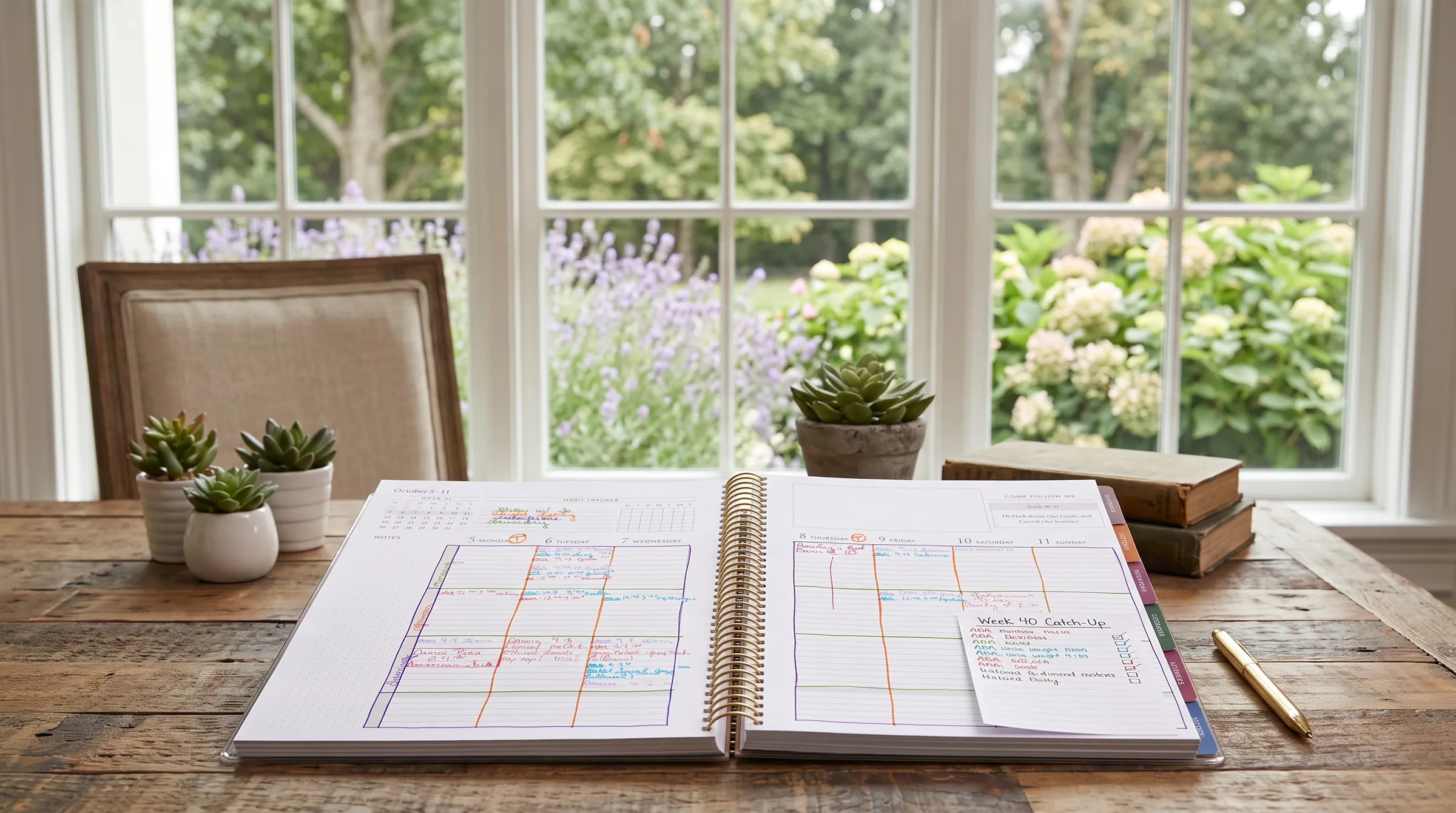
Start tonight, with this week’s reading, for five minutes. That’s the whole routine. A planner won’t fix a hard season, but it can keep this week’s outline where you’ll see it. The Kept Year, for example, offers Come Follow Me as an optional section laid out week by week and matched to this year’s schedule, with no streaks or scores, and a blank week is just a blank week.
Whatever you use, open to this week and begin there. If you’d like to see how The Kept Year handles study beside the week, you can look at thekeptyear.com.
Questions
Should I read every missed chapter before Sunday?
No. Start with this week's reading. If you want context later, a short skim is fine, but it's optional, not something you have to finish before you're allowed to start again.
Is listening to a podcast "cheating"?
No. Listening to the scriptures, or to a podcast that discusses them, can be a great way to fit study into a busy day. Just keep the scriptures themselves and the Church's manual as your main guide.
What if my spouse or teens won't join?
Study with whoever is there, even if that's just you. Keep it short and low-pressure. A gentle, repeated invitation tends to go further than pushing.
How many days a week is "enough"?
There isn't a magic number. Pick a rhythm you can keep in a normal week, even if that's two or three short sessions. A few small days beat an ambitious plan you drop.
Does a planner fix inconsistency?
Not by itself. A planner can keep this week's reading where you'll see it, but the routine does the real work. Start with five minutes tied to something you already do, then use whatever tool keeps it in front of you.